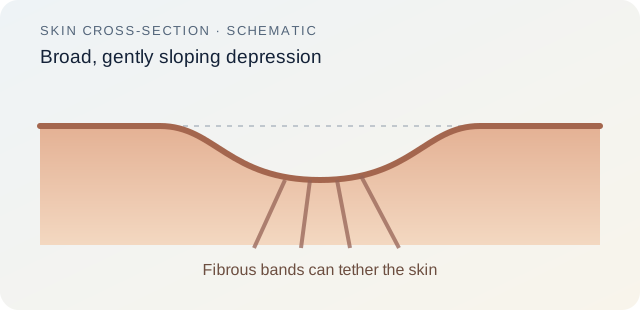
 Broad, wave-like depressions
Rolling scars
Bands beneath the skin can pull the surface down. When tethering is present, subcision may be needed before collagen-building or resurfacing treatments.
Acne scars · Hennur, Bengaluru
Acne-scar treatment at Riva combines the right techniques for your scar pattern, skin tone and recovery needs. The goal is gradual improvement in texture and scar depth.
Start with the scar type
Acne inflammation can damage collagen. Loss of tissue produces depressed (atrophic) scars; excess scar tissue produces raised scars. Many people have a mixture.
Broad, wave-like depressionsBands beneath the skin can pull the surface down. When tethering is present, subcision may be needed before collagen-building or resurfacing treatments.
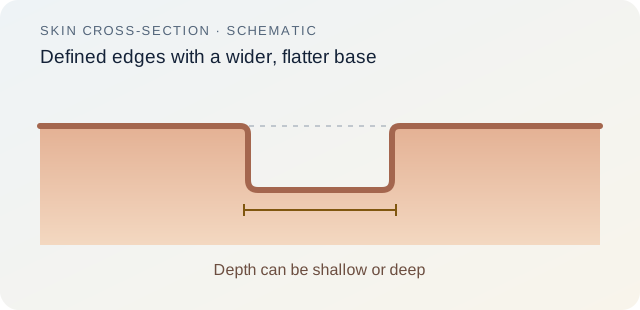 Round or oval pits with defined edges
Shallow boxcar scars may respond to fractional CO2, MNRF or microneedling. Deep, sharply edged scars may need a targeted procedure such as punch elevation or excision.
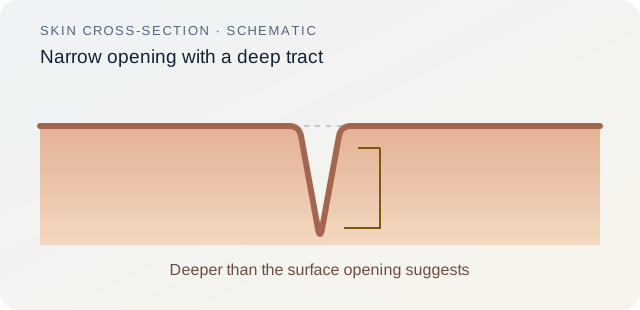 Narrow openings with deep tracts
Resurfacing alone often has limited benefit. Targeted TCA CROSS or punch techniques may be considered after assessment, alongside treatment for other scar types.
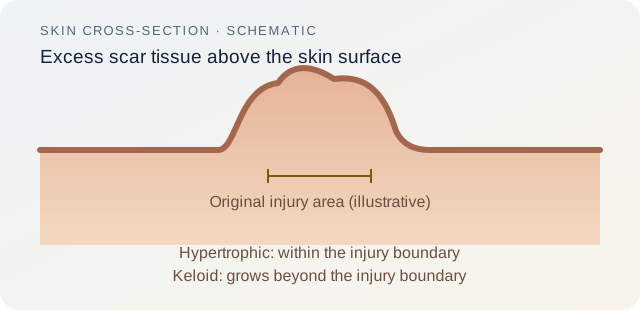 Firm scars above the skin surface
Hypertrophic scars stay within the original injury; keloids extend beyond it. They require a different plan, which may include injections or other scar-directed treatment.
Illustrations show simplified skin cross-sections, not patient photographs. Scar appearance and depth vary; diagnosis requires examination.
Brown pigmentation and lingering redness after acne do not, by themselves, mean there is a textural scar. They may need a separate plan and can coexist with depressed scars.
Why combination care matters
Treating the surface alone may leave tethering beneath it. Releasing tethering alone may leave irregular texture. A multimodal approach addresses these different problems in a planned sequence.
Map the scar types, depth and tethering; review skin tone, previous treatment, medicines and healing history. Control active acne to reduce new scars.
Select subcision for tethered scars and targeted techniques for deep pits when indicated. Combine or stage procedures according to safety and recovery.
Use appropriate laser, MNRF or microneedling for texture and collagen remodelling. Reassess healed skin before deciding whether further treatment or an adjunct adds value.
Treatment options
These are options to discuss at assessment, not a package containing every treatment. Suitability and availability are confirmed during consultation.
A needle or cannula releases fibrous bands beneath selected depressed scars, especially rolling scars. It addresses a structural cause that surface treatment alone may miss.
Often 1–3 sessions, with reassessment between treatments; further sessions may be needed.
Bruising, tenderness and swelling can last a week or longer. Bleeding, lumps, infection and rare nerve or vessel injury are possible.
Fractional columns of controlled laser injury encourage collagen remodelling and soften selected scar edges. Settings depend on scar depth, skin tone and healing risk.
An illustrative course is 3–4 sessions, usually around 6–8 weeks apart or longer if healing requires.
Expect redness, swelling and crusting, often around 5–10 days of visible recovery. Redness may persist longer; pigmentation, infection and scarring are risks.
Microneedling radiofrequency delivers energy through fine needles into the skin. It can improve selected rolling and boxcar scars and may be combined with subcision.
Often 3–4 initial sessions, around 4–8 weeks apart, followed by a response review.
Redness, swelling and pinpoint crusting may last several days. Pigment change, burns, scarring and unintended fat loss are possible with inappropriate treatment.
Controlled needle punctures encourage collagen production without laser heat. It can suit selected shallow scars; deep pits or tethered scars usually need additional techniques.
Often 3–6 sessions, around 4–6 weeks apart, depending on depth and response.
Redness and sensitivity commonly last a few days. Infection, pigment change and scarring remain possible; home rollers are not a substitute for clinical treatment.
PRP (platelet-rich plasma) and GFC (growth factor concentrate) are prepared from your own blood. They may be discussed alongside a core scar procedure. PRP has clinical evidence as an adjunct; acne-scar evidence for GFC is more limited and preparation-dependent.
Planned alongside the selected procedure when appropriate; there is no universal standalone course.
A blood draw and possible injection-site soreness or bruising are expected. Neither treatment releases tethered scars or reliably corrects deep pits by itself.
Exosomes are cell-derived signalling vesicles being studied for skin repair. Evidence for acne scars is still emerging, and products, sourcing and delivery methods vary. They are not a routine requirement for scar improvement.
No established standard session count for acne scars. Any discussion requires product-specific evidence, safety and regulatory review.
Long-term safety and added benefit remain uncertain. Topical and injectable products are not interchangeable; no FDA-approved exosome products exist. This does not establish Indian regulatory status.
Sessions & timing
Many plans start with around 3–6 treatment visits, followed by reassessment. Deep, mixed or extensive scars may need more.
The ranges above are indicative planning examples, not a prescription or a guaranteed Riva protocol. Combined procedures may share a visit; counts should not simply be added together. Healing, pigmentation risk and response can extend the interval or change the plan.
At consultation, discuss the likely first course, staged procedures, time away from work, costs and when progress will be reviewed.
Expected outcome
Scar depth, the sharpness of edges and uneven texture can improve gradually. Response varies with scar type, depth, treatment choice and healing. Deep pits often need targeted treatment and may remain visible.
There is no reliable percentage improvement that can be promised to everyone. Complete scar removal is not a realistic universal goal.
Look for change over weeks and months, rather than immediately after a procedure. Collagen remodelling continues after the treatment course; review is often useful 3–6 months after the final session.
Early swelling can make scars temporarily look smoother. Comparable photographs in consistent lighting help distinguish healing effects from lasting improvement.
Preparation & recovery
Why choose Riva
Riva Skin, Hair and Aesthetic Clinic in Hennur, Bengaluru brings scar treatment into a clinical consultation with Dr Priyanka K.
The starting point is identifying scars, marks and active acne, so treatment addresses the concern you actually have.
Discuss which techniques serve a purpose for your scar mix, skin tone and downtime, rather than choosing a device by name alone.
Understand likely visits, recovery, limitations and costs before proceeding. Optional adjuncts should have a clear rationale.
Review healing and response before the next step. The plan can change when your skin needs more recovery or a different approach.
Frequently asked questions
No. Flat brown marks or redness after a breakout are colour changes, whereas scars alter skin texture through pits, depressions or raised tissue. They can occur together, but pigment treatment and scar treatment have different goals.
Different scars involve different depths, edges and sometimes fibrous tethering. A plan may combine release of tethering, collagen stimulation and resurfacing. Treatment is selected for the scars present; you do not need every procedure listed on this page.
There is no single best procedure for everyone. Rolling scars with tethering may need subcision; shallow boxcar scars may benefit from resurfacing or needling; deep ice-pick scars may need targeted techniques. Your dermatologist assesses the mix, skin tone, history and acceptable downtime.
Many procedural plans begin with 3–6 treatment visits over several months, with selected subcision or targeted sessions added only if needed. Visits can combine suitable procedures, so individual treatment counts should not simply be added together. Deep or extensive scars may need a longer course. The plan is revised after healing and response review.
Treatment aims to make scars shallower, edges softer and texture more even. Complete removal and perfectly smooth skin cannot be promised. Some scars remain visible, particularly deep pits or extensive scarring.
Collagen remodelling takes time. Improvement may develop over the weeks after treatment and continue for months. A useful review is often 3–6 months after the final collagen-building procedure. Immediate swelling can temporarily hide depressions and is not the final result.
Active inflammatory acne usually needs control first to reduce new scarring and procedural complications. Tell the dermatologist about current and recent medicines, including isotretinoin; timing is decided for the specific procedure and your skin.
Options can be tailored to darker skin, but post-inflammatory pigmentation is an important risk, particularly with resurfacing. Device choice, settings, preparation, sun protection and recovery time all matter. No procedure is risk-free.
Topical or local anaesthesia may be used depending on the procedure. Pressure, stinging or warmth can still occur. Needling-based treatments often involve a few days of redness; fractional CO2 can need a longer recovery, and subcision can cause noticeable bruising. Your recovery instructions are procedure-specific.
Not necessarily. The core treatment should match scar structure. PRP may be a useful adjunct in selected cases; evidence for GFC in acne scars is less established, and exosomes remain an emerging option with unresolved product and safety questions. These additions do not replace scar-specific procedures.
Structural improvement can be long-lasting, but skin continues to age and new acne can create new scars. Follow-up assesses residual scars and whether further treatment is useful; automatic maintenance packages are not necessary for every patient.
Follow the prescribed cleansing, moisturising and sun-protection plan. Avoid picking crusts and restarting retinoids, exfoliating acids or other irritating products until cleared. Contact the clinic promptly for worsening pain, spreading redness, pus, fever or delayed healing.
Cost depends on the treatment area, scar mix, procedures and likely visits. A consultation is needed for an individual estimate. Discuss the core procedure, optional adjuncts, recovery needs and review plan before committing to a course.
Patient information and published evidence informing this guide. Session ranges are illustrative; your treatment is decided after assessment.
Consult at Riva